
A crochet flower bouquet is one of those charming handmade projects that feels both decorative and deeply personal.
The Crochet Flower Bouquet
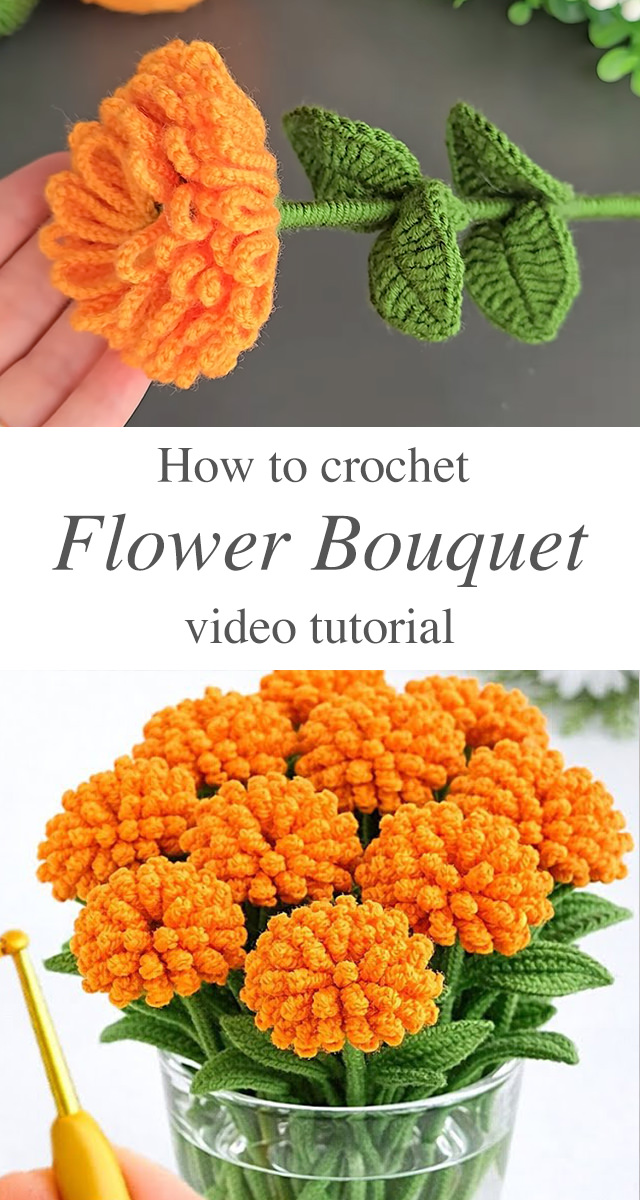
A crochet flower bouquet is more than a pretty craft. It is a small piece of textile art. Each petal, leaf, and stem carries the maker’s touch. The stitches create a tactile surface that fresh flowers simply cannot have. Tiny loops, plush clusters, curling petals, and firm green leaves all work together to form a bouquet with personality. This project is also wonderfully practical. A crochet bouquet does not need water. It does not wilt in sunlight. It can be displayed on a desk, gifted for birthdays, used as wedding decor, or placed in a glass vase as a permanent splash of color.
Flowers Related Posts:
Related Posts
And yes, it makes a beautiful handmade gift. Especially for someone who loves flowers but prefers something lasting.
Materials
To make a crochet flower bouquet, you will need yarn in flower colors such as orange, yellow, pink, red, white, lavender, or cream, along with green yarn for the leaves and stems. A crochet hook that matches your yarn weight is essential, while scissors, a yarn needle, stitch markers, floral wire, craft glue, and a vase can help with shaping and assembling the bouquet. Cotton yarn gives crisp stitch definition, while acrylic yarn creates a softer, plushier look. For a refined finish, choose shades that harmonize rather than clash; for example, warm orange flowers with deep forest green leaves create a rich, botanical effect.
Get lovely tutorials daily!
Subscribe Now

to receive daily crochet and knit tutorials.
Choosing the Best Yarn Colors
Color is where the bouquet begins to bloom.
For a cheerful arrangement, choose bright shades like marigold orange, sunflower yellow, coral, and leaf green. These colors feel lively and optimistic. For a romantic bouquet, use dusty pink, ivory, burgundy, and sage. The result feels softer, more vintage, almost heirloom-like.
A monochrome crochet flower bouquet can also look stunning. Imagine an all-white bouquet with pale green leaves, perfect for weddings or minimalist home decor. Or try a golden-yellow bouquet for a cozy autumn centerpiece.
The secret is contrast. Flowers need to stand out from the leaves, and the stems should support the whole composition without stealing attention. Dark green usually works beautifully because it gives the bouquet visual depth.
How Crochet Flowers Get Their Texture
The magic of a crochet bouquet lies in texture.
Many flower designs use stitches such as single crochet, double crochet, slip stitch, chains, puff stitches, popcorn stitches, or clusters. These stitches create volume and dimension. A flat flower can look sweet, but a raised, nubby flower looks more lifelike and luxurious.
For example, cluster-style petals can mimic the dense, rounded shape of marigolds or chrysanthemums. Long looped petals can resemble daisies or ornamental blooms. Spiral crochet can create roses with an elegant, coiled structure.
This is where crochet becomes almost sculptural. The yarn is not just lying flat; it is building form. Every stitch becomes a tiny architectural element.
Making the Flowers Step by Step
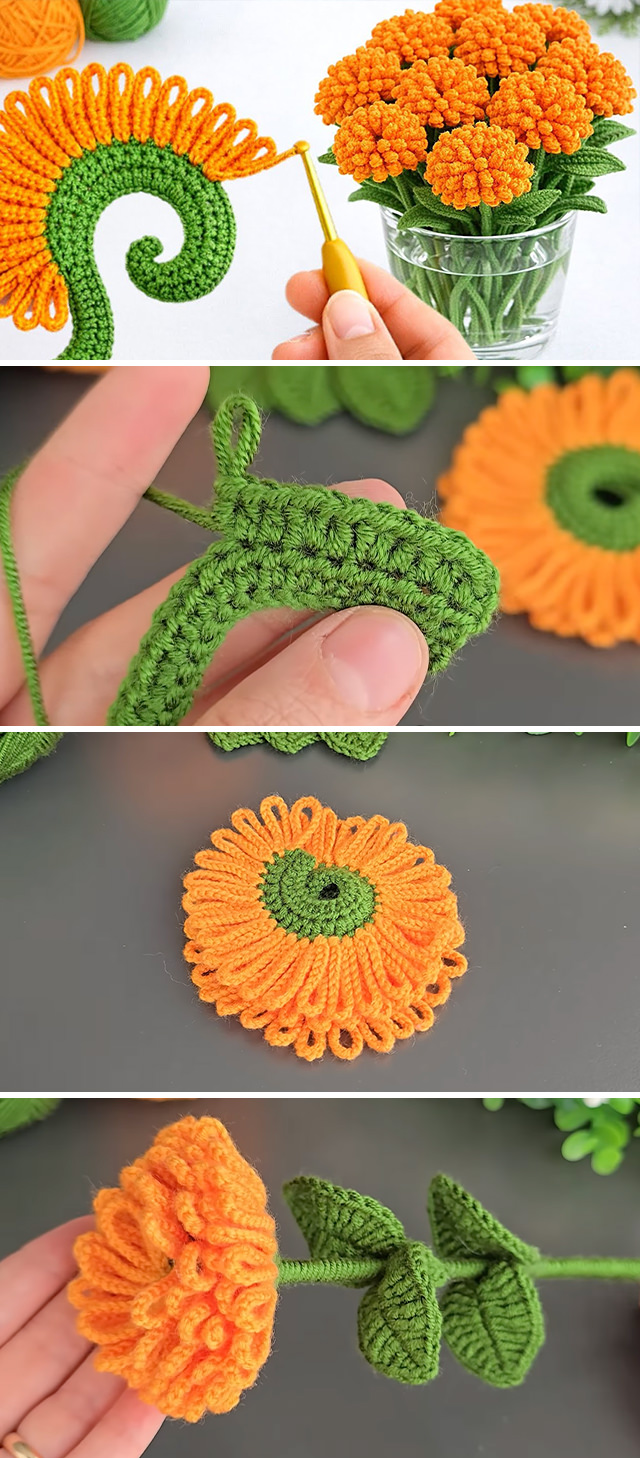
Start by crocheting the flower head. Most crochet flowers begin with a center circle, often made with a magic ring. This creates a neat, closed middle without a hole. From there, petals are worked around the center using chains, tall stitches, or textured clusters.
For a fuller crochet flower bouquet, make several flowers in different sizes. Large flowers create the focal point, while smaller flowers fill the gaps. This variation makes the bouquet look more natural and less mechanical.
Once the flower heads are finished, weave in the ends carefully. Do not rush this part. A clean back side makes assembly much easier and gives the bouquet a more professional finish.
If the flower feels too flat, shape it gently with your fingers. Some petals can be curled forward, while others can be opened outward. This small detail gives the bouquet movement and charm.
Crocheting the Leaves and Stems
Leaves are essential because they make the bouquet feel complete.
A flower without leaves can look decorative, but a flower with leaves looks alive. Crochet leaves are usually made with chains and stitches worked along both sides of the chain. This creates a tapered shape, similar to a real leaf.
For a more natural look, make leaves in different lengths. Some can be slim and pointed. Others can be wider and slightly curved. A few asymmetrical leaves will add an organic, uncontrived feeling to the bouquet.
Stems can be made by wrapping green yarn around floral wire or by crocheting a narrow tube around the wire. Floral wire helps the stems stay upright, especially if the flowers are large or heavy. It also allows you to bend and position each bloom inside the vase.
Assembling the Crochet Flower Bouquet
Assembly is where the project transforms.
Lay all your flowers and leaves on the table before attaching them. Arrange them as if you were making a real bouquet. Place the largest flowers near the center, then add smaller flowers around them. Tuck leaves between the blooms to soften the composition.
Once you are happy with the layout, attach each flower to a stem. Use a yarn needle, strong thread, or a small amount of craft glue if needed. Then secure the leaves along the stems.
Do not make every stem the exact same height. A bouquet looks more graceful when the flowers sit at slightly different levels. Some blooms should rise above the rest, while others should nestle lower. This creates a pleasing cascade and avoids a stiff, artificial look.
Styling Ideas for Your Crochet Flower Bouquet
A crochet flower bouquet can be styled in many ways.
Place it in a clear glass vase for a clean, modern display. Use a ceramic jug for a farmhouse look. Tie the stems with ribbon for a handmade gift. Add brown paper wrapping for a florist-style presentation.
For weddings, crochet bouquets can be made in bridal colors and kept forever as sentimental decor. For baby showers, pastel flowers look especially delicate. For seasonal decorating, orange and yellow flowers are perfect for autumn, while pinks and whites feel fresh for spring.
You can also make mini bouquets for party favors, bookmarks, brooches, or table settings. Small crochet flowers have a quiet elegance. They are diminutive, but never dull.
Tips for a More Professional Finish
The difference between a simple crochet project and a polished one often comes down to finishing.
Keep your tension even so the flowers look consistent. Use a smaller hook if the stitches appear too loose. Weave in every end securely. Shape petals with care. If needed, lightly steam the leaves to flatten them, but avoid pressing the flowers too much because heavy flattening can destroy their dimension.
Choose a limited color palette. Too many unrelated colors can make the bouquet look chaotic. Three flower shades and one or two greens are usually enough.
Most importantly, make extra flowers. Once arranged, a bouquet often needs more fullness than expected. A few additional blossoms can make the final piece look abundant and lush.
A Lasting Handmade Bloom
A crochet flower bouquet is a beautiful project for anyone who loves yarn, flowers, and meaningful handmade decor. It combines simple stitches with creative assembly, allowing you to build something soft, colorful, and enduring.
Whether displayed in a vase, given as a heartfelt gift, or used as a decorative accent, this bouquet brings warmth into any space. It has the joy of flowers without the fragility.
And that is the loveliest part.
With every loop and petal, the bouquet becomes something more than yarn. It becomes a keepsake.
Follow CrochetBeja on your favorite social media sites: Facebook, Pinterest, Youtube , Instagram and subscribe for the Newsletter so you don’t miss a thing!
Tutorial and photos of this crochet flower bouquet by: MimosdaMalu.



Leave a Reply